Back-Office Transformation — Process Diagnostics & Automation
50+
operational functions diagnosed
24
processes assessed with Task Mining
Up to 3×
estimated efficiency potential in selected operations
18 FTE
estimated effort-reduction potential
Description
Context
The operating-model transformation required an evidence-based view of production functions, staffing and manual workload. The objective was to identify where processes and supporting systems could be improved and where AI or robotic automation had credible potential.
Analysis approach
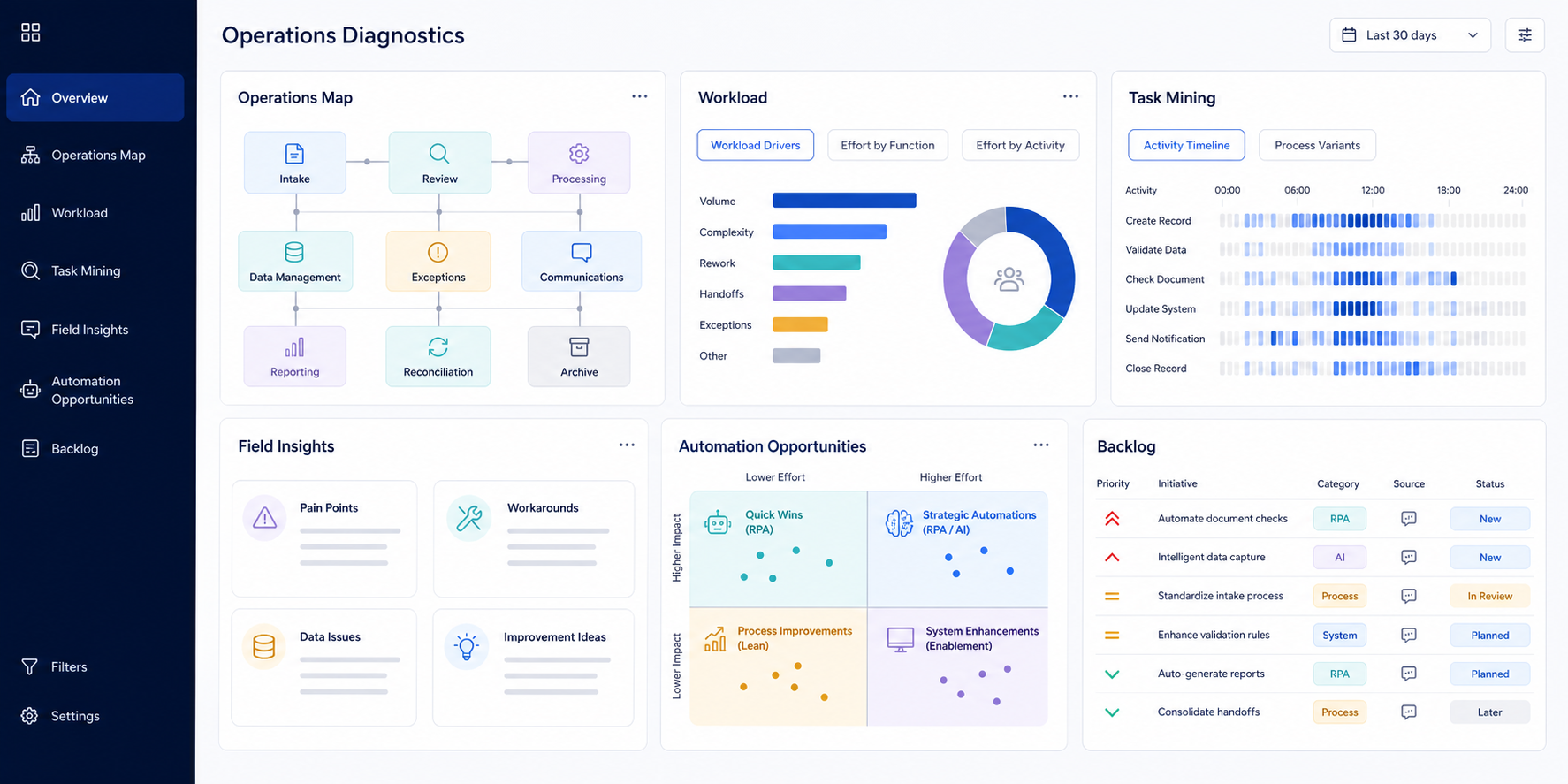
I analysed more than 50 operational functions using workload drivers and a labour-effort model. For deeper diagnostics, I combined Task Mining across 24 processes with field research: direct observation of real work, employee interviews and analysis of workload metrics. This allowed hypotheses to be validated against how operations were actually performed, including bottlenecks and hidden issues that were not visible in aggregate reporting.
I assessed the potential use of AI and RPA in manual activities, developed proposals for changes to automated systems and the user experience, and translated validated findings into a project backlog, business and functional requirements and target-process schemes for agreement with project leadership and business stakeholders.
Academic contribution
Building on this practical transformation work, I completed a second Master's degree in Information Systems with a GPA of 5.0/5.0. My thesis focused on banking back-office optimisation, developed a six-stage process re-engineering methodology and was recognised as one of two outstanding projects in the cohort. The methodology was validated across more than 20 banking processes.
Outcome
The work identified improvement and automation opportunities with an estimated potential to reduce labour effort threefold across selected operations, equivalent to 18 FTE. This was a quantified opportunity for decision-making, not a claim that the full effect had already been realised. The research adds a second result: the practical project became the foundation of a validated framework rather than remaining a one-off transformation exercise.
My Role
Combined the roles of business analyst, project manager and change manager. Led operational diagnostics, Task Mining and field research; assessed AI and RPA opportunities; and managed the discovery backlog from validated findings to requirements and target-process schemes. Coordinated the development team, project sponsor, process owners and frontline practitioners, tracked deadlines and followed up on open actions.